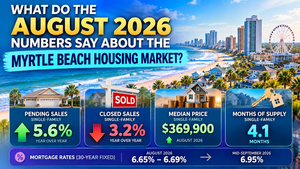
If you’re active in the Myrtle Beach real estate scene — whether you’re preparing to sell or eyeing your next purchase — you’ve likely heard that the market is “normalizing.” That phrase gets thrown around a lot, but what does it actually mean — and why does it often feel uncomfortable even when indicators are moving in a healthier direction?
After many years of unprecedented price growth, limited supply, and near-constant bidding wars, 2026 is shaping up to be a year where the pace and intensity of buying and selling starts to resemble what long-term local market observers would consider typical. But typical doesn’t always feel good. Many homebuyers and sellers are still adjusting their expectations after the fast-paced, competitive markets of the early 2020s. This blog breaks down what normalization really looks like, why it can feel tough, and how to navigate it wisely along the Grand Strand.
What “Normal” Really Means in Today’s Housing Market
In housing terms, a normal market is one where supply and demand are more balanced — meaning neither buyers nor sellers consistently hold all the leverage. Instead of homes flying off the market in hours, properties may stay listed longer; instead of multiple offers at escalated prices, buyers may find modest negotiation room.
After years of historically low mortgage rates — which helped fuel intense demand — interest rates settled at elevated levels. According to national trends, mortgage rates in 2026 are expected to average in the low-6% range, down slightly from 2025 but still well above the pandemic-era lows under 4%. (Redfin)
In this environment, inventory has slowly grown and buyer traffic is increasing, but the market remains far from a sharp downturn or extreme volatility — a steady, measured pace many economists describe as normalization. (Redfin)
Why Normal Feels Uncomfortable
Even if stabilization is technically healthy, “normal” contrasts sharply with the past few years for several reasons:
1. Less Frenzy, More Patience Needed
During the hottest months of 2020–2022, many Myrtle Beach properties saw multiple offers within days and sometimes hours of listing. That intensity trained buyers and sellers to expect quick action and fast results.
Now, with a broader range of price points and more homes on the market, offers are coming in at a more measured pace. This feels slower because it’s a shift from the breakneck speed the market was used to, even though it’s closer to long-term historical norms. (Redfin)
2. Affordability Still Matters Even In Normalization
Mortgage rates are beginning to ease, but remain significantly higher than the 3%–4% range that many homeowners locked in during earlier years. Higher financing costs make monthly payments less affordable for many buyers, which in turn tempers demand and can prolong decision timelines. (Redfin)
This causes a psychological shift: buyers often feel priced out even when inventory and wage growth improve relative to home prices. (Business Insider)
3. Sellers Are Still Adjusting Value Expectations
Many sellers who bought or refinanced at exceptionally low rates are hesitant to list their homes at prices they see as fair relative to their cost basis. This “lock-in” effect has weighed on inventory for some time. Emerging trends, however, show more homeowners listing as life changes prompt moves, slowly easing inventory constraints. (The Washington Post)
4. Local Market Variation Adds Complexity
A market that’s trending toward balance nationally may feel very different at a metro or neighborhood level. For example, areas near high-amenity corridors or close to desirable beaches may still see competitive interest, while other corridors experience more measured activity.
The Federal Reserve, Rates, and Housing Dynamics
Monetary policy — especially decisions made by the Federal Reserve — plays a central role in how housing markets evolve. While you didn’t ask for technical economics, it’s important to understand the connection:
The Federal Reserve’s decisions on interest rates influence borrowing costs for mortgages.
Higher interest rates generally cool demand because monthly payments rise.
If inflation trends toward the Fed’s targets, policymakers may hold or cut rates, which can marginally improve affordability.
(You can explore the Federal Reserve’s current policy directly via its website.)
Even small shifts in national rate expectations ripple into local markets by affecting buyer confidence, financing decisions, and price expectations.
How a Normal Market Benefits Local Buyers and Sellers
A less frenzied, more predictable market — while initially uncomfortable — offers real advantages:
⚬ More Reasoned Decision-Making
Buyers aren’t rushed into offers within hours. They can thoughtfully evaluate homes, financing, and long-term fit.
⚬ Sellers Can Target Strategic Pricing
In a normalized market, pricing homes realistically increases the likelihood of a sale without extreme concessions or rapid bidding wars.
⚬ Improved Alignments Between Wages and Price Growth
Many 2026 forecasts show wage growth outpacing price increases — meaning housing may slowly edge toward better affordability over time. (Redfin)
⚬ Inventory Gains Provide Choice
More inventory means buyers have options — from coastal condos to suburban single-family homes — without feeling forced into compromise.
What Normal Looks Like on the Grand Strand
Here in Myrtle Beach and the broader Grand Strand, some of these national trends are visible in local brokerage activity and listing behavior:
Homes are spending more days on market than in the height of the pandemic surge.
Price negotiations are more common, especially in certain price bands.
Buyer traffic has begun to recover, with some segments of the market showing increased interest from move-ups and second-home seekers.
Sellers are encouraged to set competitive prices and work with agents to highlight differentiated property features in a balanced environment.
Smart Strategies for Navigating a Normal Market
Whether you’re buying or selling along the Grand Strand in 2026, here are practical, compliant insights:
✔️ If You’re Buying:
Get pre-approved early; it signals serious intent.
Work with a local agent familiar with micro-market trends — not just national headlines.
Be ready to negotiate; offers spaced over days instead of hours require patience and strategy.
✔️ If You’re Selling:
Price homes based on comparative market analysis (CMA) rather than emotion.
Invest in staging and presentation; in a balanced market, perceived value matters.
Consider timing; some seasonal patterns still influence listing outcomes.
A “normal” market doesn’t feel like the peak of a boom — and that’s part of why it can feel uncomfortable. But balance is a sign of health, and for many buyers and sellers along the Grand Strand, 2026 will feel like a reset from extremes toward a market that’s more predictable, accessible, and sustainable.
FAQs
What does a “normal” housing market look like compared to recent years?
A normal market has more balanced supply and demand, fewer multiple offers and bidding wars, and more moderate price growth — a contrast to the hyper-competitive conditions seen during the pandemic. In 2026, inventory has grown, offers unfold over a longer timeframe, and prices are rising more slowly, which aligns more with historic averages even if it feels slower after rapid past activity. (Redfin)
Why does a normal market feel uncomfortable?
Normalization often means slower sales pace, more negotiation room, and diverse buyer preferences — which can feel unfamiliar after years of accelerated market activity. Buyers and sellers must adjust expectations around timelines, pricing strategies, and financing costs, especially when mortgage rates are higher than they were during recent historic lows. (Redfin)
How do interest rates affect housing market normalization?
Mortgage interest rates — influenced by broader monetary policy — impact monthly payments and borrowing costs. When rates rise, demand can cool; when they ease, affordability improves slightly. In 2026, modest rate declines help support stabilization and improved affordability compared with the previous year. (Redfin)
What should buyers in Myrtle Beach expect in a balanced 2026 market?
Buyers should plan for more choices, consider competitive offers thoughtfully, and work with local agents to understand micro-market nuances. A balanced environment means homes may stay listed longer than in recent years and allow for strategic offer planning without the pressure of daily bidding wars. (Redfin)