In today’s more balanced Myrtle Beach market, sellers have more leverage than they did a few years ago—but so do buyers, especially in higher price ranges and condo segments. That’s exactly why a well-structured backup offer can act as an insurance policy on your net proceeds instead of a complication.
Backup offers in a shifting Myrtle Beach market
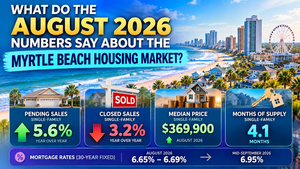
Across the Coastal Carolinas, single-family prices rose about 1.4% over the last 12 months to a median of 365,000, while condo medians slipped about 3.8% to 238,000. Inventory has also climbed to roughly 3.9 months for single-family homes and 7.4 months for condos, moving us away from the frenzy of the pandemic years and toward more balanced conditions. With more homes on the market and buyers taking longer to decide, deals can fall apart over inspections, financing, or appraisal—but a properly written backup offer can keep your sale and pricing power intact.
In Myrtle Beach specifically, condo market share remains high, and days on market have stretched into the 130-day range for many attached properties, which can increase the risk of renegotiation after you go under contract. At the same time, sellers in popular areas like Carolina Forest, North Myrtle Beach, and Surfside Beach are still achieving around 97% of list price on average when homes are priced correctly. A backup offer gives you options if your first buyer demands price cuts or large concessions that push your net proceeds down more than you’re comfortable with.
For sellers in Horry County and along the Grand Strand, backup offers are especially useful when you’re in a price band with strong buyer activity, such as 250,000–500,000, where both showings and pending sales remain solid. In that environment, your listing can often attract more than one interested party, and a structured backup position from the “runner-up” buyer puts quiet pressure on the primary contract to perform.
The backup offer strategy that protects your net
A backup offer is a fully executed purchase contract that automatically moves into first position if the primary contract is terminated in writing. While only about 5% of homes nationwide sell without an agent, most sellers use professionals precisely because they need help with pricing and contract strategy—including backups. The goal is not to “double sell” your home, but to create a safety net so you don’t have to start from zero if the first buyer walks.
Here is a seller-focused backup offer strategy that aligns with protecting your bottom line:
Require full qualification: Your agent should vet the backup buyer’s financing at least as carefully as the primary buyer, especially in a market where roughly three-quarters of buyers are financing and median down payments run near 19%. This includes reviewing pre-approval strength, loan type, and contingencies.
Match or improve key terms: The backup should meet or exceed your primary contract terms on price, closing date, and concessions, so that moving to the backup does not reduce your net proceeds. Nationally, buyers still pay a median of about 99% of asking price, and in Coastal Carolinas most sellers receive about 97% of list—your backup should support at least that level.
Limit your exposure window: Backup contracts can be written to expire on a certain date if they don’t move into first position, so you’re not locked into outdated terms while the market moves. In a region where inventory and days on market are changing, that time limit keeps your leverage current.
Use a clear notification clause: Your contract should spell out exactly how and when the backup becomes primary once the first is terminated, so there’s no confusion for either buyer. That clarity helps you avoid gaps in marketing or delays that could cost you money.
In a practical Myrtle Beach scenario, imagine you accept a strong offer on a single-family home in Carolina Forest at 400,000 with minimal concessions. Your agent also secures a backup at the same price, slightly better closing date, and similar inspection terms, from a fully approved buyer who has a larger down payment than average. If the first buyer later demands a 15,000 price cut after inspections, you can weigh that against activating the backup and preserving close to your original net.
When backup offers are most useful along the Grand Strand
Backup offers are not necessary for every listing, but they can be especially valuable in certain Myrtle Beach and Grand Strand situations. The first is when your home sits in a high-demand micro-market where showing activity is strong—areas like Myrtle Beach, Murrells Inlet, and Pawleys Island are seeing thousands of showings and high showings-per-listing ratios. Those showings often translate into multiple qualified buyers who are willing to wait in backup position.
They’re also useful when you’re selling in price ranges or property types with more volatility. Coastal Carolinas condos have softer pricing trends and longer average days on market than single-family homes, which increases the odds that primary buyers push for concessions or fail financing late in the process. In that context, a backup from a stronger, more cash-heavy buyer (cash purchases are near record highs at about 26% nationally) can be a powerful hedge against your first deal collapsing or eroding your net.
Backup offers can also support sellers who are simultaneously buying another home in the Myrtle Beach area. With closed sales for single-family homes up about 3–4% over 2024 and pending sales posting modest gains, many local sellers are also move-up or move-down buyers who need certainty about their proceeds. Knowing you have a second contract ready to step in reduces the risk of having to renegotiate your next purchase or pull money from savings if your first buyer backs out.
Not every backup should be accepted; your agent should screen heavily for seriousness and financial stability, since only about 4% of successful buyers report having been denied by a lender and then going on to buy later. You want a backup that strengthens your negotiating position, not one that gives you a false sense of security.
How backup offers shape negotiation, concessions, and your bottom line
In the current Coastal Carolinas market, roughly two-thirds of sellers are still receiving near-list price, but many are using concessions such as closing cost help or repair credits to get there. A solid backup offer changes those conversations; when buyers know there is another fully signed contract in line, they tend to be more realistic about inspection requests and price reductions.
National survey data show that 73% of sellers do not offer incentives at all, and when they do, closing cost assistance is the most common. With a backup in place, you can more confidently decide whether to offer closing cost help or repair credits because you have a viable alternative to falling out of contract and going back to full marketing. If the primary buyer’s demands would cut too deeply into your net proceeds, shifting to the backup may be the better path.
Backup offers can also help protect you from overreacting to short-term appraisal or inspection surprises. In a market where median days on market for single-family homes hover around four months on a rolling basis and where inventory has risen about 3.1% year-over-year, sellers can feel pressure to “save” the deal at all costs. Knowing you have a vetted backup gives you the confidence to hold your line on key items, especially when your home’s pricing is supported by recent local comparable sales in Myrtle Beach, North Myrtle Beach, or Conway.
As with any contract strategy, legal details and timelines matter. South Carolina forms and local MLS rules define how backups should be handled, when they become primary, and how deposits are managed, so it’s important to review your specific paperwork with your listing agent and, when appropriate, a real estate attorney. That way, your backup strategy truly supports your financial goals rather than creating unexpected obligations.
Carolina Crafted Homes stays current on Myrtle Beach market trends and can answer questions about backup offers and how they affect your net proceeds. Reach out anytime for guidance—no pressure, just straightforward expertise.
FAQs
Q1: What is a backup offer, and how does it work for Myrtle Beach sellers?
A backup offer is a fully executed purchase contract that takes effect only if your primary contract is canceled in writing. It sits in “second position” and becomes the primary contract once the first is officially terminated, with its own negotiated price, closing date, and contingencies. In Myrtle Beach and the greater Coastal Carolinas region, this can be especially helpful now that inventory has risen to about 3.9 months for single-family homes and 7.4 months for condos, creating more situations where buyers try to renegotiate or walk away. With a backup in place, you have a ready alternative instead of going back to square one.
Q2: How does a backup offer actually protect my net proceeds?
Your net proceeds depend on price, concessions, and closing costs, not just the headline offer amount. With a backup offer, you can compare what the first buyer is asking for—such as repair credits, price reductions after inspection, or closing cost help—against the terms already signed by the backup buyer. Since most Coastal Carolinas sellers are still netting roughly 97% of list price on average, a backup that matches or improves those terms helps you avoid deep cuts that would bring your final net below current market norms. If the first buyer’s demands are too steep, shifting to the backup may preserve more of your bottom line.
Q3: When does it make sense to accept a backup offer in the Grand Strand?
Backup offers are most useful when your home is attracting strong interest and there are at least two serious buyers, which is common in active Grand Strand submarkets like Myrtle Beach, Murrells Inlet, and Pawleys Island that see high showing counts. They are also valuable if you’re selling in a segment with more volatile pricing—such as condos, where median prices have been trending down by several percentage points year-over-year and days on market are longer than for single-family homes. In those situations, having a backup from a solidly qualified buyer helps hedge against the risk that your first buyer asks for aggressive concessions or fails financing.
Q4: Are there downsides to accepting a backup offer as a seller?
The main risk isn’t the concept of a backup offer itself—it’s accepting a poorly structured backup. If the backup price is significantly lower or includes large seller-paid costs, you might feel pressured to keep a weak primary deal alive because the alternative also reduces your net. In addition, backup offers can complicate communication if expectations aren’t set clearly, especially if the backup buyer believes they’re likely to move into first position quickly. That’s why most sellers rely on a listing agent to screen buyers, verify financing (critical when about three-quarters of buyers finance their purchase), and write clear provisions about when the backup becomes primary.
Q5: How do backup offers interact with appraisals and inspections?
In the current market, where closed sales in Coastal Carolinas have grown modestly and prices have stabilized or softened in some condo segments, appraisals and inspections are major leverage points for buyers. If you have a backup offer, you can approach inspection repair requests and appraisal gaps from a stronger negotiating position. Instead of feeling forced to agree to every credit or price cut, you and your agent can weigh the cost of those concessions against the option of activating the backup. That doesn’t mean refusing reasonable repairs, but it does mean you can decline requests that would unreasonably damage your net proceeds while still having a path to closing with another vetted buyer.