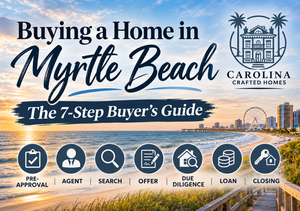
TL;DR: Buying a home in Myrtle Beach follows seven steps: get pre-approved, choose an agent, search, make an offer, complete due diligence, clear the appraisal and loan, and close. Current CCAR data shows buyers have more inventory and room to negotiate than in recent years, so preparation at each step matters more than speed.
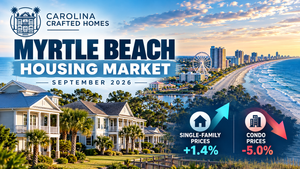
The Grand Strand gives buyers more to work with right now. According to CCAR MLS (September 2026), the market held 3,855 single-family homes for sale, a 4.2-month supply. Homes sold for a median of 97.3% of list price year to date. Mortgage rates moved the other way. FRED data shows the 30-year fixed rate averaged 6.65% in Q3 2026, up from 6.11% in Q1 2026. That mix of more choice and higher borrowing costs rewards buyers who understand the process before they start touring. This guide walks through each step of a South Carolina home purchase, using current local data so you know what to expect at every stage.
Where the Myrtle Beach Market Stands Before You Start
Before you set a budget or book a showing, it helps to know how your target area behaves. The numbers inside Myrtle Beach proper differ from the wider Grand Strand.
According to CCAR MLS (September 2026), single-family homes in the Myrtle Beach ZIP codes (29572 and 29577) sold for a median of $522,500 year to date. That is well above the $362,000 median across the full CCAR market area. Condos in the same ZIP codes ran a median of $205,000.
Time on market also shapes your strategy. Single-family homes in Myrtle Beach averaged 131 days on market through September 2026. Condos averaged 142 days. Longer timelines often give buyers more room to ask questions, schedule inspections, and negotiate.
Myrtle Beach vs. Full CCAR Market: Year-to-Date Snapshot (Through September 2026)
| Metric | Myrtle Beach Single-Family | Myrtle Beach Condo | CCAR Market Single-Family |
|---|---|---|---|
| Median Sales Price (YTD) | $522,500 | $205,000 | $362,000 |
| Percent of List Price Received (YTD) | 96.2% | 94.8% | 97.3% |
| Days on Market (YTD) | 131 | 142 | 122 |
| Homes for Sale (September 2026) | 343 | 1,470 | 3,855 |
Source: CCAR MLS, Local Market Update and Monthly Indicators (September 2026). Myrtle Beach figures cover ZIP codes 29572 and 29577. Prices do not account for seller concessions.
Step-by-Step: Buying a Home in Myrtle Beach, SC
The first three steps set up everything that follows. Most delays later in the process trace back to gaps here.
Step 1: Get pre-approved. A pre-approval tells you what a lender will offer and shows sellers you are ready. According to the NAR Profile of Home Buyers and Sellers (2025), 74% of buyers financed their purchase. The median down payment was 19% across all buyers and 10% for first-time buyers. As of September 2026, FRED data shows the 30-year fixed rate at 6.95% (week of September 17). Rates and programs are subject to change; verify current details with your lender. For a closer look at what a pre-approval letter does and does not tell you, read our guide on pre-approval vs. purchasing power in Myrtle Beach.
Step 2: Choose your agent. Most buyers work with a licensed professional. NAR (2025) reports that 88% of buyers purchased through an agent or broker. Among first-time buyers, 76% said their agent helped them understand the process. Ask how the agent will be compensated and what your written agreement covers before you tour homes.
Step 3: Search with a clear filter. NAR (2025) puts the median search at 10 weeks. Finding the right property was the hardest step for 56% of buyers. In Horry County, narrow your search by:
Property type (single-family, condo, or townhome)
Location within or outside city limits, since rules differ by jurisdiction
Flood zone designation
HOA requirements and fees
Our Myrtle Beach buyer’s guide covers each of these filters in more detail.
From Offer to Contract: Negotiation and Due Diligence
Once you find the right home, the process shifts from searching to verifying. This is where South Carolina home purchase steps protect your money.
Step 4: Make an offer. Local data gives you a useful reference point. According to CCAR MLS (September 2026), single-family homes across the market sold for 97.3% of list price year to date. Myrtle Beach condos closed at 94.8%. Those numbers suggest sellers have accepted some negotiation. Every property is different, though. Base your offer on recent comparable sales, condition, and time on market.
Your offer also sets the terms of the deal. Pay attention to:
Earnest money amount and when it is due
The length of your inspection or due diligence period
Financing and appraisal contingencies
Your target closing date
Step 5: Complete due diligence. Use this window to learn everything you can about the property. Schedule a home inspection and review any HOA documents. In coastal markets, flood exposure deserves extra attention.
Horry County Government (accessed July 2026) requires new buildings in unincorporated AE flood zones to sit at least 3 feet above base flood elevation. A “finished construction” elevation certificate must verify that height. If a home sits in a mapped flood zone, ask the seller for its elevation certificate. It can affect both your insurance quote and your future renovation plans.
The county also applies a key NFIP rule. If improvements to a building equal or exceed 50% of its market value, the structure must meet new-construction standards. Buyers planning major work should factor that in early. City of Myrtle Beach and North Myrtle Beach properties fall under their own codes, so confirm which jurisdiction applies.
Appraisal, Final Approval, and Closing in South Carolina
The final stretch moves fast. Staying organized here keeps your closing date on track.
Step 6: Clear the appraisal and final loan approval. If you finance, your lender will order an appraisal. The appraiser confirms the home’s value supports the loan amount. If the appraisal comes in low, you may renegotiate, cover the difference, or use your appraisal contingency if your contract includes one.
Meanwhile, your lender completes underwriting. Avoid new credit accounts, large purchases, or job changes during this period. Respond quickly to document requests. Small delays at this stage can push back your closing.
Step 7: Prepare for closing. In South Carolina, a real estate attorney typically handles the closing. Before that day, you will:
Review your final closing figures
Bind homeowners insurance and, if required, flood insurance
Complete a final walkthrough of the property
Arrange certified funds or a wire for your cash to close
Wire fraud targets buyers at exactly this point. Always confirm wiring instructions by phone using a number you already trust, not one from an email. Consult with a licensed professional for your specific situation.
According to NAR (2025), 92% of buyers reported being satisfied with their home-buying process. Clear steps and early preparation are a big part of that outcome, whether you buy in Myrtle Beach proper or elsewhere along the Grand Strand.
Whether you are comparing Myrtle Beach single-family homes against condos or trying to understand what a flood zone means for your offer, the right questions early can save time later. Our team works through these decisions with buyers across Horry County every week. If you want to talk through your timeline, budget, or a specific property, reach out to our team and we can walk through your next step together.
FAQ
1. What are the steps to buying a home in Myrtle Beach, SC?
Most purchases follow seven steps: get pre-approved, choose an agent, search for homes, make an offer, complete due diligence, clear the appraisal and loan approval, and close. Each step builds on the one before it. According to the NAR Profile of Home Buyers and Sellers (2025), buyers searched a median of 10 weeks before finding a home. Local conditions in Myrtle Beach and the wider Grand Strand can shift that timeline, so it helps to review current CCAR MLS data before you start.
2. How much do homes cost in Myrtle Beach right now?
According to CCAR MLS (September 2026), single-family homes in the Myrtle Beach ZIP codes 29572 and 29577 sold for a median of $522,500 year to date. Condos in the same area had a median of $205,000. Across the full CCAR market, the single-family median was $362,000. Prices vary widely by location, property type, and flood zone. These figures do not account for seller concessions.
3. Do I need to be pre-approved before looking at homes in Myrtle Beach?
A pre-approval is not legally required to tour homes, but it gives you a clear budget and shows sellers you can follow through. NAR (2025) reports that 74% of buyers financed their purchase. As of September 2026, FRED data showed the 30-year fixed rate at 6.95%. Because rates move week to week, a pre-approval helps you see how current rates affect your monthly payment. Programs and rates are subject to change; verify current details with your lender.
4. Can I negotiate on price in the Myrtle Beach market?
Current data suggests room for negotiation. According to CCAR MLS (September 2026), single-family homes across the market sold for 97.3% of list price year to date, and Myrtle Beach condos sold for 94.8%. Homes in Myrtle Beach also averaged more than 130 days on market. That said, each property is different. Your offer should reflect recent comparable sales, the home’s condition, and how long it has been listed.
5. What should I check if a Myrtle Beach home is in a flood zone?
Ask the seller for the home’s elevation certificate and confirm which flood zone applies. According to Horry County Government, new buildings in unincorporated AE flood zones must sit at least 3 feet above base flood elevation, verified by a finished-construction elevation certificate. If you plan major improvements equal to 50% or more of the building’s market value, the home must meet new-construction standards. City of Myrtle Beach and North Myrtle Beach follow their own codes, so confirm the jurisdiction.
6. Who handles the closing when buying a home in South Carolina?
In South Carolina, a real estate attorney typically handles the closing. Before closing day, you will review final figures, bind insurance, complete a final walkthrough, and arrange your funds. Always confirm wiring instructions by phone using a number you already trust, since closing is a common point for wire fraud attempts. Consult with a licensed professional for your specific situation.
Sources
Coastal Carolinas Association of REALTORS® (CCAR MLS — Monthly Indicators & Local Market Update, September 2026): https://www.ccarsc.org/pages/marketstats/
National Association of REALTORS® — 2025 Profile of Home Buyers and Sellers: https://www.nar.realtor/
FRED Economic Data — 30-Year Fixed Rate Mortgage Average (MORTGAGE30US): https://fred.stlouisfed.org/
Horry County Government — Build Responsibly (flood zone requirements): https://horrycountysc.gov/